|
Enjoy
Getting your Trinity Audio player ready...
|
In today’s society, you can never be enough. It pains me to think how anyone can be expected to keep up with the modern world. With the internet, consumer and social trends are overabundant, shifting and shaping the people we strive to become. There is maintaining our beauty, exercising, work life, organising our finances, keeping up with current affairs, catching up with the latest TV shows, movies and celebrities; relationships; children; family members and events. The list goes on, raising the question of how do ever we know or become who we want to be when so many people and events shape our actions? The pressure to do and become can be suffocating. Seeing others rise and fall in social rankings leaves us all questioning whether we could ever become someone of significance. This social itch to become brings discussions about content and happiness. This article aims to highlight that the person striving for contentment today will have to simplify both their material surroundings and their mental attitude. The practical response is to be found in the underappreciated virtue of Authenticity. If we strive to live morally truthful, honest lives based on stronger self-acceptance, the toxins of resentment cease to exist. Authenticity grants us a life that is real, made by our actions and not one fuelled by competition, resentment, jealousy or cynicism.
- The Pressure To Become
A. Competition
Sentiments of comparisons and competition have long existed, only today we find them in a more insidious form. The globalised world affirms it is no longer just about us. All of us are connected by the power of the internet, the media, travel and communication. Technology around us has proved inescapable as even the Swartzentruber Amish find themselves necessitated to modern-day devices and processes to get around in world affairs. It doesn’t take a social extrovert to be instantly caught in the social tidal wave of images, videos, movies, TV shows, podcasts, opinion posts and more fed by our many electronic devices. Fundamentally, this tiring mass consumption of information, which never stops, has reshaped how we perceive ourselves in significantly new ways. For the casual gym-goer or local baker, their eyes and ears do not catch just what’s in front of them, but also the thoughts, messages, looks and showcases of people across the globe. As such, expectations have enormously changed as the scope of comparison has enlarged and reached into new areas.
Dr Haidt (2024) helps us understand that this vast modern exposure to lifestyles and social trends affects children and adults at a deeper psychological level. Humans throughout existence have held a psychological bias towards questioning their own ranks amongst society. To survive amongst our peers, our brains developed a need to fit in with our surroundings, seeking acceptance through a mirroring effect (p.59). Hence, the things we see, do and hear continue to have an enormous effect on shaping the ideals we pursue. In today’s “phone-based” generation, the need to find our place in society has amplified to unrealistic levels. Images, videos and commentaries all flood our perceptions, forcing identity to not only become a general concern but also a prevailing question of youthhood. If this person is doing x, why am I doing z? Should I be doing x, or am I good enough for doing z? It would appear nowadays you have to be doing everything. On top of holding a job, shelter and family, so too does the pressure of keeping up with fashion, beauty, money, job titles, relationships and travelling, all against a fear of missing out.
This social comparison paradigm has been used and exacerbated by today’s consumer capitalism. In the book Less is More (2020), Jason Hickel shows us the way the present world economy has mind-numbingly sunken into a chase for a growth of growth’s sake. While growth in children, relationships are things we want; very few ever question whether more production and consumption (GDP) is forever necessary or good, like our capitalist world makes it out to be. Relentless growth has thus become an unquestioned reality that has bled into our lifestyle choices.
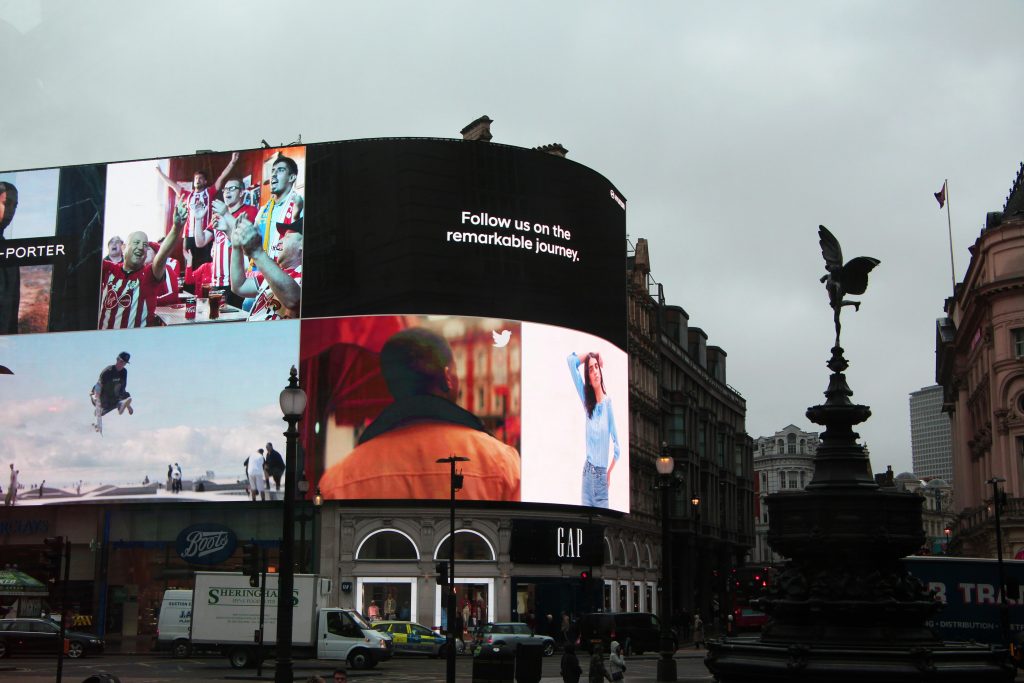
As both consumers and producers, it is clear we climb an ever more intricate, unrealistic terrain. The relentless growth imperative has stretched the commodification of the individual like never before. Our senses, including hearing, seeing, smelling, tasting, and even belief systems, have become products that are purchased, sold and replaced in the capitalist economy. For example, many social identities come with their own set of products, branding, and aspirational aesthetics. Through consuming content from TV shows, movies, influencers or billboards, a person may immerse themselves “into” Wellness and Mindfulness, Fitness, Coffee, Photography, outdoor and adventure, gaming, travel and more. Hence, it is not difficult to say that social identities and popular interests have become as numerous as our material consumption.
B. Societal Expectations
Nevertheless, one may argue that you need a society looking over its shoulder to be a prosperous country. The care for public image is what instils discipline, motivation and care. Countries like Japan and Korea are often cited as places where a culture’s extraordinary sense of order and productivity has enabled public harmony.
This obsession with public image, however, reveals a different story with cultures entrenched in anxiety, depression and suicide. As many studies emphasise, it is not only biological or economic but more significantly cultural factors that contribute to the rates of mental health conditions. As Kim, Shin and Park (2023) summarise, studies have shown East Asian adolescents exhibit lower levels of life satisfaction than their North American and European counterparts, stemming from a deeply competitive environment to succeed and avoid shame within the collectivist Asian culture.
Conversely, in the West, where cultural expectations can be said to be less intensive, the issue of anxiety and depression remains a serious societal problem. According to the 2025 Gallup Study, depression and anxiety rates have surged to historical highs. The OECD Health at a Glance report highlights that psychological distress among adolescents remains elevated well above pre-pandemic levels, with 52% of 15-year-olds in European countries reporting multiple mental health complaints. A recent study by UCL on depression, anxiety and stress incidents between 2000 and 2019 shows that rates have more than doubled amongst 16-24s, with rates being substantially more among females. Therefore, it appears culturally from the shared worldwide experience in mental health concerns that the cause is more deep-seated. In other words, cultural freedoms and identities have not been the “solutions” to mental health struggles as identity politics and crises continue across the world.
C. Overabundance of choice
The continued campaign for diversity and inclusion has paradoxically made identity formation an issue in itself. The yearning to associate with groups, socially and politically, has fuelled children and adults into a restless search to become.
On the one hand, the campaign has been a revolutionary awakening for many social groups, granting new individualism. Discourses in places have allowed unspoken voices to come to the surface, bringing new perspectives and ultimately helping us push back against propaganda and false truths. On the other hand, this postmodernist reconstruction has brought with it the hammer to its own self-destruction. The rejection of “truths” has hollowed out the tried and tested, the sacred and the profane and the social conventions that once supported societies like in Central Europe. The idea of the self now seemingly floats adrift. Where we could settle on sex, gender, class and ethnic groupings, the ground has become convoluted.
Similar to a generational zeitgeist, social media showers us with ways to reshape norms and expectations. The freedom to choose seldom represents real learning through study, choices and consequences. Instead, we find the layperson striving in more ways to make an impression on their peers. This is what lacking authenticity means: to lose the sense of oneself. Your choices no longer reflect deep acceptance and willpower; it becomes the chasing of being someone else. This will always be a failed mission, as little do we ever praise someone for mimicking – charisma and respect are what we find in someone who has learned to establish themselves. In all, many people find themselves chasing fluid identities and abstractions in the social media paradigm. More awareness is needed to recognise those who lead and we admire are the ones who are winning by not playing the game.

D. Pleasure
Very few of us will dare to ask ourselves, are we genuinely being unique if we all define ourselves by our common animalistic, instinctual desires? We can all accept that we have base desires which make it easy or ‘natural’ to pursue them to the greatest extent. Our bodies, at first instance, would tell us that is all we need. To eat, make love, sleep, seek more pleasure and avoid activity and pain. However, this remains a one-dimensional view of what it means to “be free”. As we find with the postmodernist epoch, there remains a prevailing existential identity crisis.
The existing young generation is growing up more anxious and depressed within the growing subcultures. The yearning to establish and affirm an identity continues as social and political life becomes a more complex terrain in our interconnected social spaces. This precarious existence, bewildered by social media and short-term gratification, fails to pin down authenticity in its raw form. If living truthfully applies to self-acceptance and higher purpose, the postmodernist paradigm does not serve as an effective framework.
2) What is Authenticity
To strive in a teleological manner; not to become someone else or reject yourself, but to ascend yourself in moral, ethical and practical qualities. The first step is self-acceptance, followed by self-overcoming (amor fati) according to one’s own abilities and circumstances.
- Superficial Authenticity
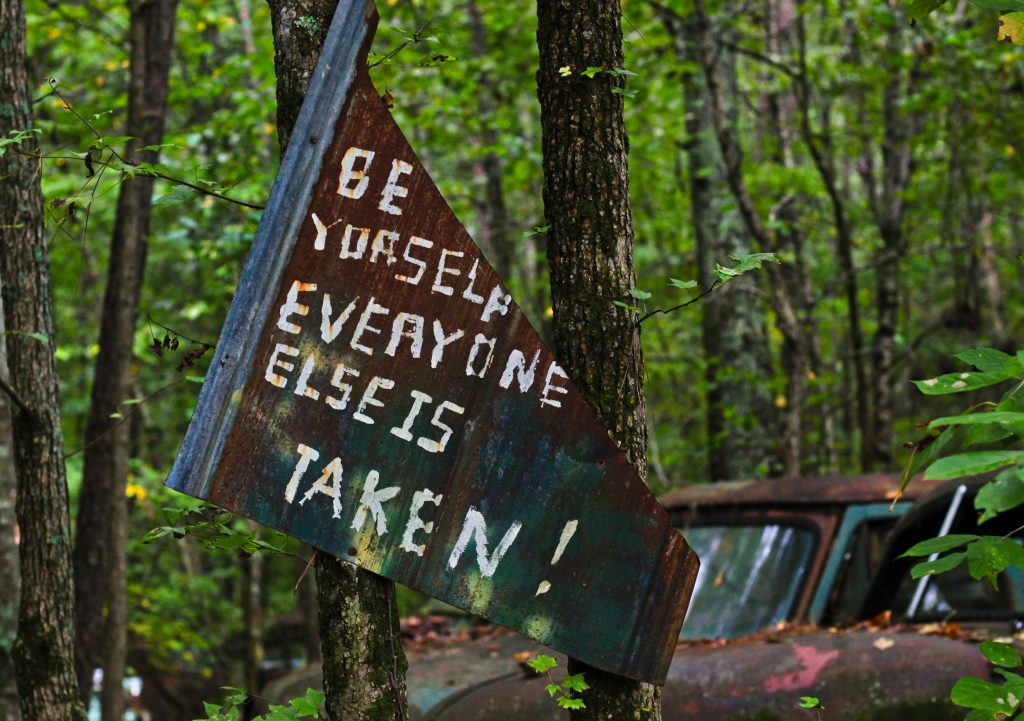
Ultimately, deeper discussions about authenticity have been missing. The word authenticity gets used a lot. For instance, in casual discussions, it is often related to the quality of someone being original and themselves in the moment. The word extends to material things as well. It also implies something different, unique and honest in its design. Increasingly, authenticity in its use today also possesses a romantic ideal. It has become a word for pride and identity. To reflect the mantra of the saying to “just be yourself”, which denotes expressing one’s thoughts and feelings without shame or pressure to fit in with the popular culture.
This concern, however, stays embedded in an outward image of the self that accelerates only a superficial understanding. The sole focus of being yourself seems to imply that authenticity only arises after you make a display of yourself to others. For instance, like displaying your confidence by putting on a gala dress and strutting around. While this may look powerful, the dependency on an outward show proves this perspective remains on precarious ground, dependent on the view of others. Moreover, what does it really mean to “just be yourself”? You have probably been told this before an interview or joining a new social gathering. Do I not need to act in a certain way, talk and look a certain way, do a certain thing, and essentially in the end give in to being someone different to who I really want to be? Society nevertheless demands we shape and shift ourselves in certain ways to avoid being ostracised.
Against society’s growing list of demands, you further find a vengeful type of authenticity. One that is planted in the obsession to prove you are unique. Just like with social media, the obsession of some people turns to fighting popular culture steeped in hubris. They simply deny and reject thoughts, feelings and trends of the time, not because of principled reasons they have gained through introspection, but because they seek to be edgy, ‘unique’ in character. Their superficiality is revealed when identity wearing becomes stuck in flamboyancy. These people, before anything, seek attention, forcing themselves in every way to be the outlier. The one who doesn’t just dress differently but also obsesses on pointing out faults in others, presenting their opinions as revelations and blowing their own trumpet to try to gain a following. In all, this showing off to being authentic paradoxically leaves one submitting to the verdict of others in the same way as if we were obsessively chasing mainstream trends.#

B. Deeper Authenticity – beginning on the inside
The source of true authenticity, made unbreakable and charismatic in nature, begins from the inside qualities of a person –Virtues rooted in the moral qualities of a person. They are principles of ourselves that we fundamentally need and practice to keep society going. They never finish as these qualities are marks of excellence. They are positions of glory that we can only continue striving towards with compassion and purpose. The Stoics, on their deep contemplation of the good life, understood this well. In their outline, there are Five Cardinal Virtues which together reveal an authentic living, according to oneself and the uncontrollable reality around us.
There is Temperance, the quality of being calm and composed. This would refer to not being overly reactive or impulsive, as the world shows enough times, like in the emotions of anger or lust, they rob ourselves from being our longer-term self. For instance, a fit of rage may drive us to smash up our walls or even scream divorce, but when the moment subsides, we all concede this was us under influence, not our true selves and often leaves us regretting our prior moments. If we allow ourselves to think about our personality, thoughts and intentions away from the crazy scenes of the world, we discover this is only where we understand who we are – the solitude which meets moderation and calmness. This reserved space where we direct the questions back on ourselves enables us to accept and practice being the best person we can be, rather than being swallowed by the superficial forces of the outside world.
There are indeed many events and people we cross paths with that are so strong, there is a hardwired emotional response that reason forever battles against. Whether it’s dealing with death, violence, abuse, cheating, etc., it would appear the emotion in our very reactions expresses who we are. The difference here, however, is that it’s not about eliminating those emotions but taking a moment to pause before reacting – to bring out firm, reasoned emotion above our natural reactionary responses. With all of us possessing phenomenally different personalities, this tendency to react according to our longer-term self-empowers us to react according to our unique styles. Whether it be through humour, gentleness, love, condemnation and more, where these approaches come with more reason than impulse and fury.
There is also Wisdom, the quality of foresight often based on experience. This remains an extremely important aspect of living a meaningful life, as this quality embodies multiple aspects. For a start, wisdom is not the same as intelligence, which can be gained by sitting in a class. To gain wisdom requires us to make movements in our lives. There is no real-world significance found in forever secluding yourself away from the world. To grow as a person, as a brother or sister, mother or father, uncle or aunt, granddad or grandma, you need to experience the world to be the voice that can guide others. Often, due to the countless different circumstances we all find ourselves in, from geography, economics, politics, health and more, no amount of studying can prepare you for life. The events that happen throughout our lives, be it happy, sad or regret, must be lived through to understand what could be changed. Secondly, this wisdom can only happen by returning to self-reflection. To be the voice of the generation, leading the young through the dark with a light of hope, wherever it may be, you yourself need to express insights to those who have not yet experienced them. Life is often like a prism, the closer you get, the more refracted the light gets, demanding we account for multiple dimensions to a thought – something the old-aged exercise of self-reflection absolutely offers, be it in our heads or on paper.
Subsequently, wisdom, when understood as experience and self-reflection, naturally grants a huge space to express our true selves. If we do not focus on simply pleasing others but actually resolving difficulties in our own way (i.e. accepting mistakes/failures, taking advice, seeking help, meeting new people, embracing new cultures, reading, writing, taking moments to reflect), we profoundly discover the amazing crafting of our own story. It is in these difficulties, events, and challenges that we encounter and overcome that are forever remembered and told for generations to come. This story, as long as we learn to deal with it in our own way, as our responsibility will be our guaranteed way to being wiser.
The virtue of Courage also feeds into producing true authenticity from within. The truth remains that in life, we must all, from time to time, move outside of our comfort zones. As with age and events that take place in our lives, such as moving schools, getting a job and so on, all push us out of necessity to take on new challenges and responsibilities. Much like the cycle of a butterfly, the identity of the self hatches and is left to roam the vast world, leaving us to choose where we go, what we do and how we do it. Subsequently, to be our true selves, not moulded for fashion or other people’s pleasure but for the significance we find within ourselves, we ought to keep moving – learning, discovering and challenging to enrich our mind and body before others.
Courage is not merely about combat or being the hero of the day. On a personal level, it thrives in the veins of those who are not afraid to be proven wrong or make mistakes. The courageous one is the person who relishes being different because they seek to experience and overcome their naiveties. The beautiful thing with the Stoic perspective on courage is found in its introspective nature, doable by everyone through focusing on small steps. The challenge to be courageous does not belong in a hypercompetitive state against others, but rather with your own very consciousness. By making challenges relative to you, comparing a moment now and from your past, you get to realise the immense opportunity as with Wisdom, to stamp your own story – with all its cuts, best takes and future memories.
Interestingly, Nietzsche had a powerful term to capture this sense of courage to be oneself – armour fati or self-overcoming. He argued that being oneself was not good enough to bemoan all the problems of the world. There are many things unfair in life, and sometimes there is little within our control. The solution, however, is not to despair or complain forever. As struggle is a universal condition, we ought to accept, endure and most importantly seek a way out of the struggle through our own grit and determination. This willingness to take on struggle allows an individual to thereby take more physical action than the one who succumbs to mental apathy. Therefore, by embracing courage in this way, to embrace more of life and challenge oneself, helps express a natural character profoundly unique to you and others that no one can take away.
Finally, the fourth cardinal virtue of Justice also proves to be a means to shape a future that is rooted in purpose and meaning against the constant, frail sway of the outside world. At first, this may seem like a more detached institutional concept from the individual. In its rarest definition, it can be described as the system we create to achieve a level of fairness according to an understanding of law, order and equality. However, in this Stoic definition, justice can be understood more simply as the acknowledgement to do right by others – that is, to be honest, fair and responsible towards our fellow human beings. It may then be a question, how does this relate to authenticity, being true in thought and action? Well, justice is not merely practice but also a belief that demands we live as our best selves on principle, not impulse or the trends of the time. To believe in Justice is to subscribe to the idea that there is meaning and purpose to the universe, a moral order that we all ought to uphold. It may still exist far above our heads.
As we find ourselves in the vast animal kingdom, we remain the commanding, ontological force to think and act with evil or good, still bounded by the forces of nature beyond our control. As long as each one of us holds sanity, whether it’s our tongues, hands, ears, mind and body, the duty to carry the order of the universe falls on us, the intuitive creatures. Therefore, as human beings born with moral responsibilities, living selfishly according to one’s whims and fancies remains unfaithful to the human condition. As members of a society of a shared planet, living truthfully in whatever form must be grounded in our existential need for compassion, order and honesty. For without justice, we cease to function as individuals with a moral conscience.
3) Authenticity as the way to happiness and contentment
Authenticity, discussed at great length here, in meaning and purpose, fortunately still retains what we are all looking for – happiness. It’s been said in many places that happiness is a complex emotion. It isn’t merely the feeling you get after buying a new car, clothes, perfume, etc. or a smile. If we all care to admit, very few of us would intentionally declare ourselves happy. According to the Cambridge Dictionary, happy is “feeling, showing, or causing pleasure or satisfaction”. Yet, in life, where there are so many expected emotional falls and highs, happiness would appear to belong to childhood. The times when the smallest of things, like ice cream and chocolate, would make you leap in excitement while you held little to no responsibility, little to no worry about what the future is yet to bring. The natural development of the adult mind to feel complex emotions from envy, resentment, pride, ambition, confidence, apathy, fulfilment, melancholy, and more are all feelings that scatter our perception of pain and pleasure.
- Self-improvement for ourselves
Subsequently, in this more common nebula of neither sadness nor happiness as we live rhythmically through routine and habit, it inevitably leaves us to assessing ourselves by pitting ourselves against others. It may seem ironic to say, but the mantra of self-improvement needs to come with an asterisk, as this drive alone reveals to miss an essential element. Many of us get caught in a self-improvement cycle. Often, we complain that it’s the endless self-help videos and books available to us. In part that is an issue, although it does address the deeper cause. In striving to improve ourselves, we can lead ourselves onto the wrong path, where the drive for change and progress is a relentless, brutal rejection of ourselves. We are never good enough. And what usually shapes this dissatisfaction? Our peering over the shoulder, checking to see where the next person is, what they are worth, what they are doing. Subsequently, self-improvement driven by a lack of self-worth becomes a toxic cycle – a mental and physical drain that many now seem to complain about in our unrelenting materialistic, consumer-driven world.
The point here is, therefore, to emphasise the importance of authenticity as an empowering virtue to truly better ourselves. Not for worry and impressions of others, but for once and for all, towards the appreciation of ourselves. So that means bettering our nutrition, body, reading, learning new skills, making new friends, seeking new challenges and more, all to nourish ourselves as we strive to care for our pets and plants.
4) How to be authentic
Having learnt the importance of authenticity towards finding meaning, contentment and self-development, the question will logically follow: how can I be authentic, especially when it seems everyone has already been or done something? Simply put, holding authenticity close to heart as a virtue requires action – moments where you will be your best self. Choosing which you make without looking over someone’s shoulder because it harms no one, while expressing your likes/dislikes/well-intentioned reasoning. Subsequently, harnessing this decision-making power in everyday life, from how you choose to speak, dress, eat, make friends with, engage in hobbies, etc., is not a chase but about you being you. An embodiment of calm self-acceptance and respect.
- Self-acceptance
To be authentic means to find deeper, utter acceptance of oneself. No longer is the focus on submitting to the verdicts of the people. Instead, the questions fall back on yourself: who are you, what do you want to become, what matters to you most? To be authentic means to be a friend to yourself. In defining who you are by letting go and narrowing the things that matter to your livelihood the most, there are no excuses but to be emphatic about your own strengths and limits. There will be many instances in life where you will face many doubts. As long as you have faith that it was your authentic self, in all of its weaknesses, there is no reason to question fate – it was your mistake or accident, but unpreventable in time because you were only acting as yourself. True authenticity here therefore demands you to be your better self. Certainly, this does not mean harming or screaming to yourself, but helpfully correcting the problem or taking lessons from the event.
At the same time, being authentic gives an incredible way to accept and conquer the many unique challenges life throws at us. Rather than feeling humiliated for doing something that seems so simple for the majority of people, or feeling so personally attacked by the world, the intention of being authentic can transform every little struggle into your own powerful, charismatic story. In the moment, you will be reminded that your struggle is not to merely impress others or even perform miracles, it’s simply you caressing your life, trying and pushing to be better in what is true respect to your mind and body.
B. Distress Tolerance
Moreover, this act of authenticity, to self-overcome, only becomes truer when we see the issue of escape avoidance learning. It is not true to ourselves to continuously cave in and run away from every bit of discomfort in our lives. Ultimately, life will put us in difficult positions. This is not about always staying in this discomfort. But it is about tolerating the distress and finding within yourself a potential pushback (distress tolerance as discussed by Dr K). Even if done once, you can be pleased you were true to yourself by trying and confirming, in contrast to letting the conditioning of your environment and the looming thought of others destroy you. Perhaps you tried the gym once or playing football with strangers, having done and still not feeling satisfaction, you can proudly take no as an answer as part of your authentic self. See how it was your true self deciding yes and no, rather than the vague impressions of yourself and others. You may still ask, so to what end is this all for? You can be pleased to know that the more times you do something, the better and more adapted you become. Like your mind and body attending the gym, your ability to tolerate distress or simply do things confidently yet respectfully without the worry of others, you will notice a continuing stream of calm self-acceptance and self-overcoming. Achievements inevitably become a side-effect, which you can look back at with pride and joy; this will be your authentic self in motion.
Thereby, I come to realise happiness is not a given emotion but one achieved by multiple other feelings coming together. To be happy is not simply to laugh, but more rarely to recognise the moment being joyous, as a memory to capture. Think about it, there have probably been many times you haven’t been sad or depressed. It didn’t mean you were necessarily happy. Or maybe you attended happy events or celebrations, but didn’t feel happy. This complexity in feeling and recognising happiness emphasises that this is ultimately an aftereffect or overlapping feeling when other sentiments are met. Along with other conditions that will be saved for another discussion, authenticity forms a significant tributary to feeling happy.
Interestingly, the opposite of being your authentic self seeps into what we think is guilt. On Dr Andrew Huberman’s podcast, clinical psychologist Dr Becky Kennedy explains the way shame and guilt can creep up on parents who are otherwise doing little wrong in parenting or ethical practice. She argues in adult life we can fall into the trap of suppressing our true selves – we often feel that for friends, family and strangers, our compassion must stretch as far as absorbing their emotions. In practice, however, this is not only unrealistic but also unhealthy for our mental and physical well-being, as ultimately everyone, parents included, needs and deserves emotional boundaries to keep oneself sane, let alone another person. Moreover, this sense of guilt is also misplaced by us forgetting its true definition. As she neatly puts it, guilt refers to thoughts or actions that are misaligned with our core set of values (intuitive and learned). When we think about ourselves being ‘ourselves’, we suddenly realise we are neither harming others nor contradicting our deeper values. For instance, correcting someone for a wrong coffee order, deciding to spend the night indoors, suggesting a different holiday location, disliking foods and drinks that many seem to enjoy. In this way, where some may feel ostracised for being different, internalising the virtue of Authenticity offers an empowering sentiment to being the bear – grounded and self-sufficient.

C. Individual storytelling – mistakes, failures, successes
It can feel extremely liberating to finally understand that all of us are as unique as our thumbprints. Although society ceases to function without common laws and customs, no amount of censorship can eliminate each person’s ability to express differences. Being your true self thus demands dropping the chase for mass approval. It is within our thoughts and opinions that we understand there is an intuitive self to every person, forever similar yet fundamentally different from each other. Despite the constant pressure to fit in that looms above us all, it is vital to understand that the wider and deeper you suppress your ability to choose without seeking approval, the larger the backlash effect will be in blaming others for preventing you from being yourself. Instead, authenticity here teaches us to restore agency by taking ownership of every choice. This is again not about winning battles over others but simply affirming our God-given emotions and physical boundaries to be ourselves, in line with the harm principle, accepting rest, curiosity, love, joy, dislikes, distastes, etc., without causing direct harm to others.
The importance of taking ownership of actions becomes ever more significant when understanding the link between authenticity and charisma. As we learn from the behaviour of charismatic people, a good personality has to be real and never forced. You cannot simply declare yourself charismatic, likewise saying you are an authentic person. The greater sentiment to embody what it means to be authentic, your true self with purpose and significance, is to act and speak according to it. It is only then, when your well-intentioned self, will you find pride in knowing how and why you compose yourself the way you do. Naturally, those on the outside will notice, all without there ever needing to be a discussion on who you are. And this time, this will certainly not be for mere impression’s sake but your way to truly connect and appreciate the people who find an affinity to your character. As long as you know you have composed and acted according to your authentic best, there ought to be no disappointment in those who do not mingle with you, as the goal in the first place was to choose according to yourself, not the impressions of the crowd.

D. Hobbies
The easiest way to express authenticity is through hobbies. The subject of hobbies often goes amiss, especially in today’s context, where many Gen Zs are blamed for having far too much social free time and not enough work. The topic of hobbies seems to have been reduced to the precious or guilt-ridden spare hours dedicated to claiming back our hours from the time enslaved away at work, school and wherever else life compels us to be. The truth remains, however, that hobbies are the greatest expression of an individual. If it isn’t merely watching endless YouTube videos, there are deep opinions, perspectives and talents to be found in the activities people find themselves doing in their spare time. Little do many realise, hobbies are not merely fun and games, they are vital crafts that fundamentally shape and express in the loudest ways who we really are. So much so, I believe it is impossible to find anyone without a hobby. As the Romans once embraced boredom as a tool for heuristic endeavour, so too do our choices, however small or large, in our precious spare time reflect our deeper character – its strengths, flaws, likes, dislikes and outlook on life. For instance, it could be enjoying cooking, drawing, crafting, reading, gaming, watching movies and television shows, exercising, hiking, and so much more. If well intentioned, every hobby carves us the time and space to bring our present self as is into action. Hence, it could be said that the easiest way to understand a person is not to ask about what they do for a living but what they do to pass the time.

Conclusion:
In all, the ever-demanding social media age more than ever requires us to reinvigorate the virtue of Authenticity. Where there seems to be an endless race to become, through our constant information streams, many people have unfortunately been caught in a trap chasing dreams, ambitions and goals that were never there’s, all to make an impression on the world. Instead, our competitive, superficial social media age needs fighting back with Authenticity.
This article has presented Authenticity as the highest form of virtue. To be authentic is to be socially and morally aware, yet to act as oneself, not for someone but for yourself. This means still ensuring our actions are in accordance with the moral values and intuitions we all hold above society for a functioning human existence. The four cardinal virtues of Stoicism: temperance, courage, wisdom and justice all naturally lay the foundation towards being authentic. Once we hold value to enduring our own struggles and making our actions purposeful, we begin writing our own stories – for our personal development and the wider good of the world. Hence, authenticity is not chased but is rather a natural shine to one’s armour for someone who is deeply comfortable and virtuous towards themselves and others.
Overall, to liberate oneself from the fear of other people’s verdicts is to acknowledge the uniqueness of every individual, even in the most censored state. All of us possess likes and dislikes, strengths and limitations. Differences are what give every single one of us a unique character that ought to be respected, not suppressed.
References
Brenan, M. (2024) ‘U.S. depression rate remains historically high’, Gallup News. Available at: https://news.gallup.com/poll/694199/u.s.-depression-rate-remains-historically-high.aspx (Accessed 18 April 2026).
NIHR School for Public Health Research (2023) ‘Changes in depression, anxiety and stress over two decades’. Available at: https://sphr.nihr.ac.uk/news-and-events/news/changes-in-depression-anxiety-and-stress-over-two-decades/ (Accessed 18 April 2026).
OECD (2023) Health at a Glance 2023. Available at: https://www.oecd.org/en/publications/health-at-a-glance-2023_7a7afb35-en.html (Accessed 18 April 2026).
Zhang, Y., Zhang, L., Zhang, G. et al. (2023) ‘Life satisfaction and mental health: A longitudinal analysis’, Frontiers in Public Health, 11. Available at: https://pmc.ncbi.nlm.nih.gov/articles/PMC9914214/ (Accessed 18 April 2026).
